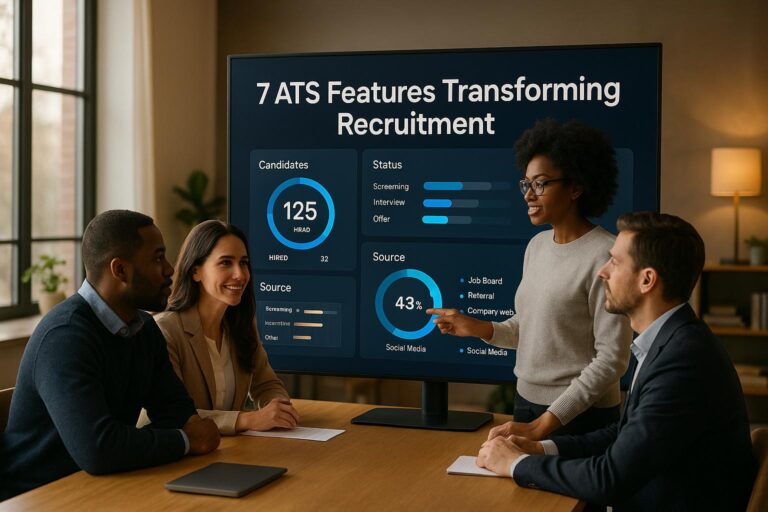
ATS platforms have become essential tools for modern recruitment, helping companies reduce hiring time, improve decision-making, and create a better candidate experience. Here are the 7 key features reshaping how hiring teams work:
- Candidate Pipeline Management: Simplifies tracking applicants through visual pipelines and centralized dashboards, reducing miscommunication and bottlenecks.
- Team Collaboration Tools: Enables shared feedback, structured interview coordination, and real-time updates for better hiring decisions.
- Custom Career Pages: Highlights employer brand with tailored content, mobile-friendly design, and simple application processes.
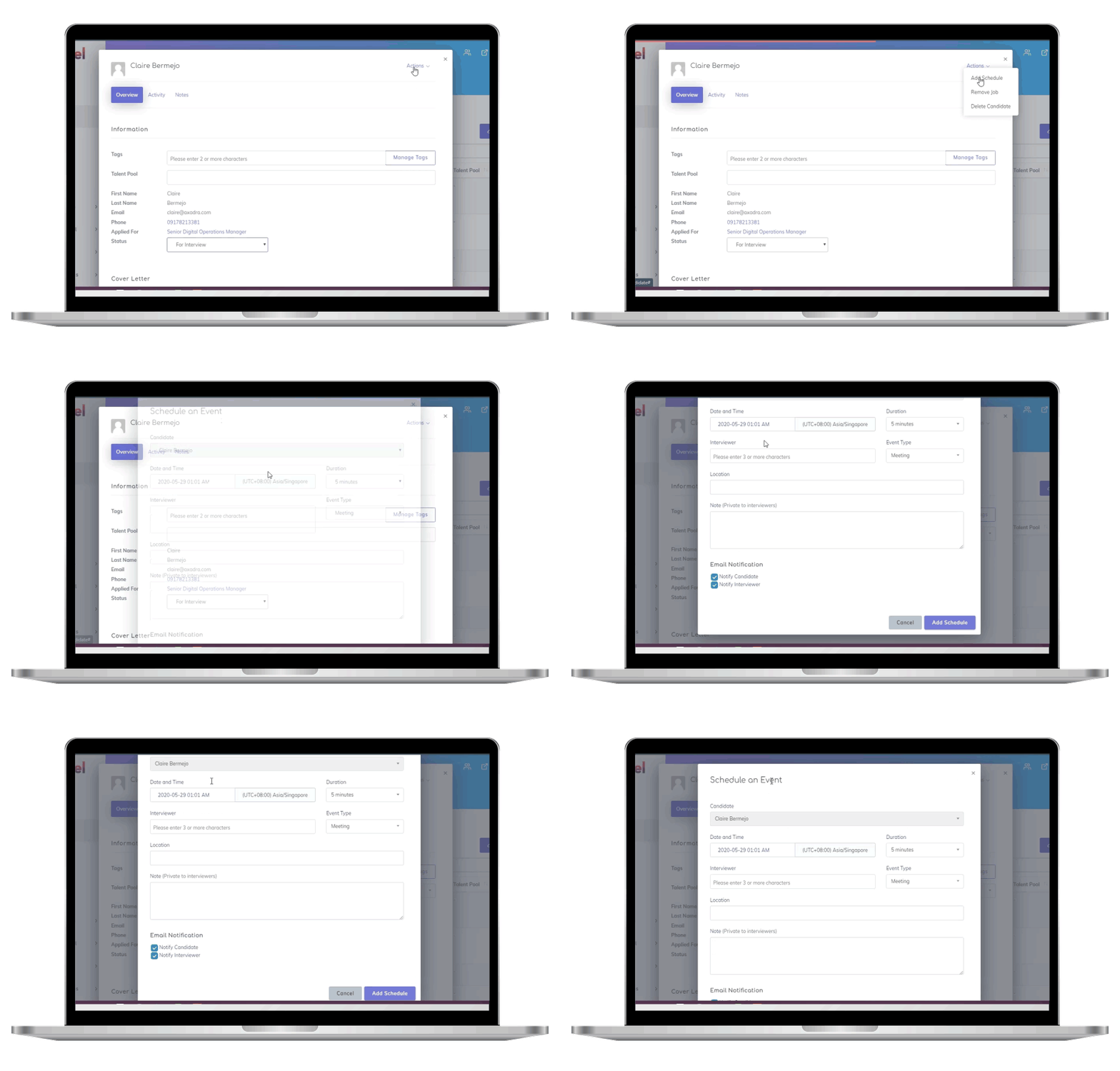
- Automated Interview Scheduling: Eliminates scheduling hassles with calendar syncing, time zone management, and automated reminders.
- Advanced Candidate Screening: Uses AI to quickly filter and rank candidates based on skills and experience, saving time and improving accuracy.
- Centralized Candidate Database: Stores all candidate data securely in one place, making it easy to search, organize, and revisit for future roles.
- Recruitment Analytics and Reporting: Provides data-driven insights into hiring trends, recruiter performance, and diversity efforts.
These features not only streamline recruitment but also ensure a smoother, more professional experience for both candidates and hiring teams. In the competitive U.S. job market, adopting these tools is critical for staying ahead.
ATS Features
Candidate Pipeline Management
Gone are the days of juggling spreadsheets, sticky notes, and endless email threads to manage candidates. Modern recruitment teams now rely on a visual approach that makes tracking candidate progress simple and clear. Candidate pipeline management organizes applicant data in one place, ensuring everyone stays on the same page.
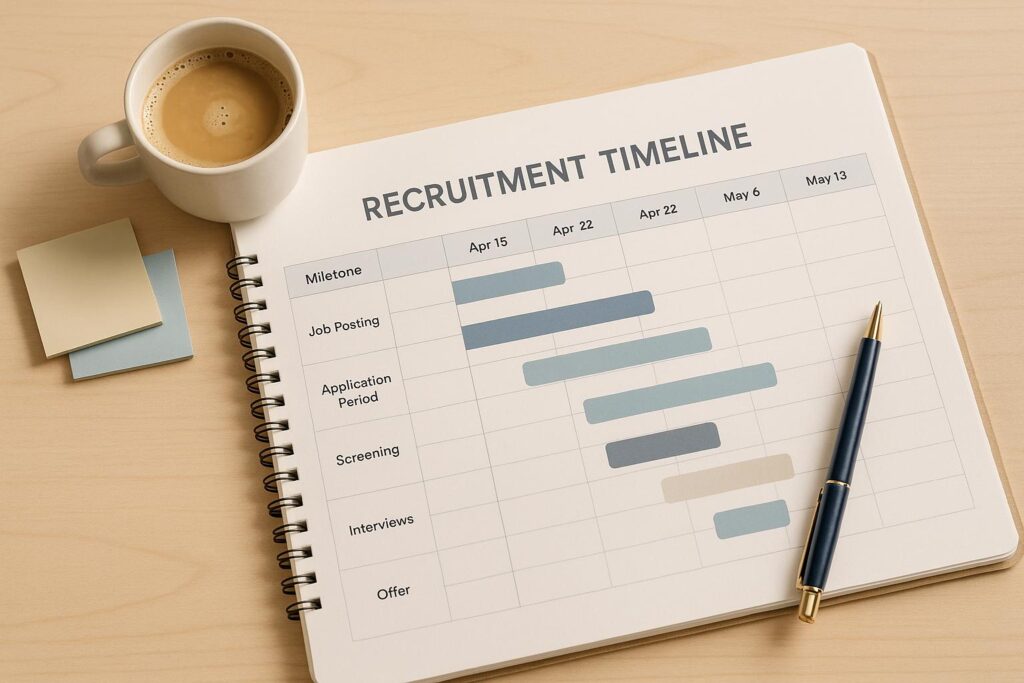
Think of a well-structured candidate pipeline as a roadmap. It shows exactly where each applicant is in the hiring process – whether they’ve just submitted their application or are awaiting a final decision. This clarity is especially important when managing multiple candidates for different roles. It not only simplifies tracking but also encourages better collaboration and decision-making.
Benefits of Visual Pipelines
Visual pipelines offer a clear snapshot of where candidates stand at every stage of the hiring process. This transparency helps reduce bottlenecks and miscommunication. With each step clearly outlined – from initial screenings to final offers – it’s easier to ensure no candidate slips through the cracks.
These pipelines also minimize the need for constant updates. Everyone involved, from recruiters to hiring managers, can quickly see progress without back-and-forth emails. This visibility fosters trust and keeps expectations aligned, enabling faster and more effective hiring decisions. To take it a step further, centralized dashboards integrate all this information into one accessible platform.
Centralized Dashboards for Tracking
Centralized dashboards take pipeline management to the next level by providing real-time updates across all open roles. Acting as a single source of truth, these dashboards let recruiting teams track progress without jumping between systems. They show everything from candidate activity at each stage to the overall health of the pipeline, making it easy to spot areas that need attention – like positions requiring more applicants or stages causing delays.
Skillfuel’s centralized dashboard is a great example of this streamlined approach. It consolidates all candidate information into one place, allowing teams to monitor application flow, manage interview schedules, and plan next steps without the chaos of scattered data. Weekly updates keep hiring managers informed and engaged, turning them into active participants in the recruitment process. This consistent communication ensures that challenges can be addressed collaboratively.
Standardized processes supported by these dashboards also speed up decision-making. Shared evaluation forms and collaborative feedback tools ensure everyone is working from the same data. When teams follow consistent procedures, approvals happen faster and with greater confidence.
Team Collaboration Tools
Visual pipelines may simplify processes, but collaboration tools truly bring teams together. Recruitment has always required teamwork, yet older methods often led to isolated efforts and miscommunication. ATS platforms solve this by creating shared spaces where recruiters, hiring managers, and interviewers can collaborate effortlessly. These tools eliminate the chaos of scattered feedback and disconnected communication.
This collaborative approach transforms hiring into a more thoughtful process. When team members can easily exchange insights, compare notes, and track candidate progress, decisions become more informed and less rushed. Instead of relying on fragmented opinions, teams can collectively build detailed candidate profiles. This shared input leads to better evaluations and stronger hiring decisions.
Better Team Decision-Making
Collaboration in recruitment works best when there’s a shared evaluation framework in place. Using consistent criteria and scoring systems allows for fair and straightforward comparisons. Team members can review how others rated candidates on skills, alignment with company values, and overall potential, creating a well-rounded perspective that no single person could achieve alone.
Collaborative feedback systems also help reduce bias by incorporating diverse viewpoints. For example, while one interviewer might focus on technical expertise, another could assess communication or leadership qualities. Together, these perspectives create a balanced evaluation. This is especially useful for senior roles, where input from multiple stakeholders is crucial to assess a candidate’s qualifications from all angles.
Skillfuel’s collaboration tools make this process seamless. Multiple team members can access candidate profiles simultaneously, add real-time feedback, and review others’ assessments. This ensures hiring decisions are based on a complete and collective understanding of each candidate.
Structured interview coordination also becomes easier with these tools. Teams can assign specific focus areas to different interviewers – for instance, technical leads can evaluate job-specific skills while HR representatives assess cultural alignment. This division of responsibilities ensures comprehensive evaluations without overlapping questions, which can frustrate candidates. Real-time collaboration keeps everyone on the same page, enabling smoother decision-making throughout the hiring process.
Real-Time Updates and Shared Notes
The power of real-time collaboration shines when teams can instantly share updates and observations. Centralized candidate notes ensure that key insights from screenings, reference checks, and informal conversations are accessible to everyone. This prevents critical details from slipping through the cracks and keeps the entire team informed at all times.
Live status updates are another game-changer. For instance, when a hiring manager gives the green light to move a candidate forward, recruiters can immediately see this update and act on it. This instant communication eliminates delays caused by waiting for email confirmations or follow-up meetings.
Shared interview feedback further streamlines evaluations. Instead of waiting for formal debriefs, interviewers can input their thoughts right after a meeting. Other team members can review this feedback immediately, enabling quicker decisions on whether to advance or decline a candidate.
Consistency in collaboration also enhances the candidate experience. When all team members have access to the same information – like a candidate’s background, interests, or concerns – every interaction feels more personalized and informed. Candidates notice when interviewers reference earlier conversations or show an understanding of their career goals, which leaves a lasting impression.
Most ATS platforms also include team communication features, such as discussion threads tied to specific candidates. These threads keep hiring-related conversations organized and easy to search, making it simple to revisit important points or decisions made weeks earlier. This documentation is also helpful for analyzing what worked well in successful hires, offering valuable lessons for future recruitment efforts.
Custom Career Pages
Your company’s career page is often the first impression for potential candidates. In fact, more than half of job seekers research companies and explore career pages before deciding to apply. This makes your career page a critical tool in attracting the right talent.
Did you know that around 75% of job seekers begin their search on Google? And 78% of them say they would apply using their mobile devices if the process were easier. Yet, many companies fail to capitalize on this by sticking to outdated or overly generic career pages, missing out on top-tier candidates.
Custom career pages can change the game. Instead of bland job listings, these pages can showcase what makes your company stand out – your culture, values, and unique opportunities. They’re not just a place to post jobs; they’re a platform to communicate your employer brand effectively, which we’ll dive into next.
Building Your Employer Brand
Telling your company’s story is key to helping candidates picture themselves as part of your team. A strong career page doesn’t just list job requirements – it invites job seekers into your world through stories about your culture, employee experiences, and growth opportunities.
Visual content is a powerful tool here. Career sites with video testimonials, for example, hold job seekers’ attention 37% longer than those without. Think about including employee testimonials, day-in-the-life videos, or behind-the-scenes looks to give candidates a genuine feel for your workplace. These elements go far beyond what a typical job description can offer.
Highlighting diversity and inclusion is another essential aspect. Candidates want to see diverse teams, inclusive policies, and language that reflects a welcoming environment. This not only supports compliance but also shows a real commitment to fostering an inclusive workplace.
Skillfuel offers customizable career pages that make it easy to create a branded and engaging experience without needing extensive technical resources. You can highlight your company’s visual identity, emphasize your unique strengths, and tailor content for specific roles or departments. This ensures every visitor finds something relevant and engaging.
By naturally incorporating examples like flexible work options, professional development programs, or community involvement, you give candidates a clear picture of how your values translate into everyday work life. While a strong employer brand pulls candidates in, a simple and intuitive application process ensures they stick around.
Simplified Application Process
The application process can either win over candidates or drive them away. Research shows that 60% of job seekers abandon online applications because they’re too long or overly complicated.
To avoid this, a streamlined and mobile-friendly process is a must. Strategic placement of "Apply Now" buttons throughout the page ensures that interested candidates can take action without unnecessary delays.
Start by asking for only the most essential details upfront. You can always gather more information later in the process, once candidates have shown genuine interest. This reduces friction and keeps them engaged.
Skillfuel’s career page tools include built-in mobile optimization and direct integration with applicant tracking systems (ATS). This means application forms are not only user-friendly but also feed directly into your hiring workflows, saving time for your team while creating a seamless experience for candidates.
Accessibility is another key factor. Features like screen reader compatibility, clear navigation, and logical layouts ensure that everyone can complete the application process smoothly. Real-time updates – such as automated emails or status portals – keep candidates informed every step of the way, from submission to final decision. This transparency builds trust and keeps candidates engaged throughout the hiring journey.
Automated Interview Scheduling
Scheduling interviews can often feel like a maze of endless emails, calendar clashes, and time zone confusion. These delays not only slow down hiring decisions but also leave teams and candidates feeling frustrated.
Automated interview scheduling simplifies this entire process. By syncing calendars, managing time zones, and sending reminders automatically, it creates a seamless system. The result? Faster hiring, happier candidates, and recruiting teams free to focus on finding the right talent.
Less Administrative Work
Traditional scheduling is a surprisingly tedious task. HR professionals and hiring managers spend hours juggling emails, checking availability, and rescheduling conflicts. This eats into time that could be spent on more impactful activities like evaluating candidates or building relationships.
Automation takes over these manual tasks. Once a candidate reaches the interview stage, the system sends them a link to view open time slots based on the interviewer’s real-time calendar availability. The candidate picks a time, and the platform handles the rest – sending calendar invites, confirmation emails, and any pre-interview details.
Time zones? No problem. Automated systems adjust for the candidate’s local time zone, making multi-state or remote hiring easier and reducing the risk of missed interviews due to confusion.
Integrations with widely used U.S. calendar systems like Outlook, Google Calendar, and Apple Calendar ensure real-time scheduling updates. If an interviewer blocks time for a meeting or vacation, those slots instantly disappear from the candidate’s options, avoiding double-booking and last-minute cancellations.
Skillfuel’s interview scheduling feature takes it a step further with instant calendar syncing, automatic candidate communication, and easy rescheduling. If changes arise, the system quickly offers new slots, updates calendars, and notifies everyone involved. This streamlined approach saves time and enhances the overall process.
With less administrative hassle, hiring teams can focus on creating a better experience for candidates.
Better Candidate Experience
For candidates, the scheduling process often serves as their first impression of how organized and professional a company is. A clunky scheduling experience can leave top talent unimpressed before the interview even begins.
Automated scheduling puts control and flexibility in the hands of candidates. Instead of waiting for HR to respond with a few limited options, they can instantly view all available slots and select what fits their schedule. This is particularly helpful for employed candidates who need to plan interviews around their current jobs.
In today’s fast-paced world, mobile-friendly scheduling is a must. Candidates expect to manage their interviews from their phones, whether they’re commuting, on a lunch break, or checking emails in the evening. Automated systems ensure the scheduling interface works smoothly across devices.
The system also provides candidates with detailed interview information upfront. This includes the interviewer’s name and role, the meeting location or video link, what to expect, and any materials they need to prepare. Having this information in advance helps candidates feel confident and ready.
Automatic reminders keep everyone on track. Candidates typically receive confirmation emails as soon as they schedule, followed by reminders 24 hours and 1 hour before the interview. These can include helpful details like parking instructions, building access codes, or updated video links.
Transparency is another key benefit. Candidates get instant confirmation and can see the interview on their calendar, reducing uncertainty and anxiety. This shows respect for their time and creates a more positive impression.
For video interviews, automated systems can even include technical preparation tips in the confirmation email. Candidates might get links to test their camera and microphone, download necessary software, or troubleshoot common issues. This proactive guidance ensures a smooth interview experience and adds a layer of professionalism.
sbb-itb-e5b9d13
Advanced Candidate Screening and Filtering
After streamlining scheduling and collaboration, the next step in hiring is leveraging advanced screening tools to speed up and improve candidate selection. Manual screening can take days and often risks missing out on qualified candidates.
Advanced screening and filtering tools turn this process on its head. These systems use artificial intelligence (AI) and algorithms to assess candidates based on specific skills, experience, and job requirements. Instead of combing through every resume, recruiters receive a curated list of the most promising candidates in just minutes.
These tools go far beyond simple keyword searches. Modern applicant tracking systems (ATS) analyze factors like education, work history, skill sets, and career progression to identify candidates who genuinely match the role. This reduces time spent on unqualified applications and allows recruiters to focus their energy on engaging with top-tier talent.
AI-Powered Screening for Efficiency
AI has completely transformed how quickly companies can pinpoint strong candidates. These tools can analyze resumes in seconds, matching qualifications to job requirements with impressive accuracy.
For instance, AI-powered systems can identify candidates for a software developer role by scanning for relevant programming languages, project experience, and educational credentials – all without human input. They don’t just look for keywords but also understand context, recognizing variations in terminology to ensure qualified candidates aren’t overlooked.
The speed advantage is undeniable. Tasks that once took HR teams hours per position can now be completed in minutes. This is a game-changer for high-volume hiring or filling urgent roles where a quick turnaround is critical. Faster screening not only saves time but also keeps candidates engaged throughout the process.
Machine learning further enhances these tools. As recruiters provide feedback, the AI refines its recommendations, making future screenings even more accurate. For example, Skillfuel’s AI-powered screening ranks candidates by fit score, highlights key qualifications, and improves with every hiring cycle.
Geographic and remote work preferences are also easily managed. AI screening can identify candidates open to relocation, remote roles, or specific regions, helping companies build diverse teams without location constraints.
While speed and efficiency are key benefits, ensuring compliance with fair hiring practices is equally important.
Legal Compliance in Hiring
U.S. employment laws place a strong emphasis on fair hiring practices, and advanced screening tools are designed to align with these requirements. Equal Employment Opportunity Commission (EEOC) guidelines prohibit discrimination based on race, color, religion, sex, national origin, age, disability, or genetic information.
Modern ATS platforms include features to help prevent discriminatory practices. These systems focus solely on job-related qualifications, filtering out personal details like age or marital status that could introduce bias. This ensures that hiring decisions are based on merit.
Compliance is also supported through detailed audit trails and consistent evaluation criteria. Advanced screening tools automatically log decisions and apply the same benchmarks to all applicants, reducing bias risk and providing clear documentation if hiring practices come under scrutiny.
The Americans with Disabilities Act (ADA) mandates reasonable accommodations during hiring. Advanced ATS platforms can flag accommodation requests and ensure they’re handled appropriately throughout the process.
In addition, these tools help companies meet record retention requirements, which vary based on state and federal laws. By automating documentation, businesses can maintain proper records for the required timeframes – typically one to three years – minimizing compliance risks and administrative work.
Another vital feature is adverse impact analysis, which examines hiring patterns to identify if screening criteria disproportionately affect protected groups. This allows companies to make adjustments before potential legal issues arise.
Even with advanced tools, training and human oversight remain critical. HR teams must understand how these systems work and regularly review outcomes to ensure compliance standards are upheld. While the technology enhances compliance efforts, it doesn’t replace the need for knowledgeable professionals to oversee the process.
Centralized Candidate Database
A centralized candidate database takes recruitment to the next level by bringing all candidate records together in one place. When data is scattered, it leads to lost details, duplicate work, and missed opportunities. By storing applicant information, resumes, interview notes, and communication logs in a single, secure location, recruiters can work more efficiently and effectively.
With a centralized database, recruiters can instantly access complete candidate profiles and interaction histories. This creates a single, reliable source of information that becomes increasingly valuable over time as it collects data across multiple hiring cycles. Modern applicant tracking systems (ATS) rely on this approach to seamlessly connect candidate data across different recruitment phases.
For example, platforms like Skillfuel automatically organize and store all recruitment-related data. Every resume upload, interview note, email exchange, and status update is captured in a candidate’s profile, creating a detailed record that the entire team can access. This shared access ensures that valuable candidate connections are never lost and can be revisited for future roles.
Secure Data Storage
Candidate databases often contain sensitive personal information, such as Social Security numbers, salary expectations, work histories, and contact details. Protecting this information requires robust security measures.
Top-tier ATS platforms use multiple layers of security to safeguard data. Encryption protocols ensure that data is secure both during transmission and while stored. Role-based access controls restrict sensitive information to authorized personnel, assigning different permission levels to recruiters, hiring managers, and administrative staff.
For companies hiring internationally, GDPR compliance features are standard. These tools allow candidates to request the deletion of their data, update personal information, or withdraw consent for data processing. Automated retention policies ensure that data is purged in line with legal and company guidelines.
To further protect against potential threats like system failures or cyberattacks, backup systems and disaster recovery plans are in place. Regular security audits and penetration testing help identify and address vulnerabilities. Detailed audit trails provide accountability by tracking who accessed specific candidate records and when, supporting compliance efforts.
Cloud-based storage adds another layer of security. Professional data centers offer 24/7 monitoring, redundant systems, and specialized security expertise that most companies cannot replicate in-house. Multi-factor authentication further enhances security, requiring users to verify their identity through multiple methods before accessing sensitive data.
Investing in secure storage builds trust with candidates, encouraging them to share accurate and complete information. It also protects companies from legal risks, making secure data practices a win-win for everyone involved.
Quick Access and Search
One of the biggest advantages of a centralized database is the ability to quickly search for candidates using specific criteria like skills, location, or salary range. This transforms a static database into a dynamic talent pool.
Advanced search features, like Boolean search, allow recruiters to perform detailed queries. For example, searching for "Java AND Python AND (remote OR San Francisco) NOT contractor" can pinpoint candidates in seconds. Fuzzy matching ensures that variations in terminology don’t cause candidates to be overlooked – searching for "project manager" will also return candidates listed as "program manager" or "PM."
Recruiters can also use custom tags to categorize candidates based on qualities like "strong communicator", "open to relocation", or "team player." These tags make it easy to identify the right candidates for specific roles, and their value grows as the database expands and teams develop their own shorthand for candidate attributes.
Saved searches and alerts take things a step further by automating the discovery process. Recruiters can set up search criteria for common roles and receive notifications when new candidates meet those requirements. This proactive approach ensures that promising candidates are identified quickly, improving both efficiency and the candidate experience.
Integration with communication tools adds even more functionality. Email exchanges, phone call notes, and interview feedback all become searchable. For instance, if a recruiter remembers that a candidate mentioned working with a specific client but forgets their name, searching for the client name can help locate the right person.
Beyond individual searches, these tools support talent pool analysis. Teams can evaluate the strength of their pipeline for various roles, identify skill gaps, and adjust sourcing strategies accordingly. Reporting features provide insights into which recruitment sources yield the best candidates, helping optimize time and budget.
With mobile access, recruiters can retrieve and search candidate data from anywhere – whether at a job fair, between interviews, or working remotely. This flexibility ensures that the hiring process continues seamlessly, no matter where the team is located.
Recruitment Analytics and Reporting
Modern applicant tracking systems (ATS) do more than just simplify candidate management – they also provide teams with real-time analytics that make decision-making smarter and faster. Recruitment today thrives on these analytics dashboards, which turn raw data into meaningful insights. This approach goes hand-in-hand with the streamlined tracking and collaboration processes discussed earlier, creating a powerful synergy.
Skillfuel takes the heavy lifting out of data tracking by automatically monitoring key recruitment metrics from application to hire. This seamless integration not only saves time but also connects operational efficiency with strategic recruitment decisions.
Data-Driven Recruitment Insights
Analytics dashboards uncover trends and patterns that might otherwise go unnoticed in the daily grind of recruitment. For example, time-to-fill metrics show how long positions remain open, helping pinpoint areas where the process can be improved.
Another valuable tool is source effectiveness tracking, which identifies the channels that bring in the best candidates. Diversity tracking, a growing priority in recruitment strategies, is also key. Companies with above-average diversity report generating 45% more revenue from innovation. Analytics tools allow organizations to securely track demographic data and create reports based on location, recruiter, or hiring manager, helping identify gaps and refine efforts to promote inclusivity.
Beyond this, data can highlight recruiter performance trends, showcasing individual strengths in hiring for specific roles. Cost-per-hire analysis is another critical metric, breaking down recruitment expenses so teams can budget effectively and justify their spending to leadership.
Custom Reporting Features
While standard reports provide a solid foundation, custom reporting takes recruitment analytics to the next level by tailoring insights to specific goals and challenges. For instance, technical roles might need detailed tracking of coding assessments, whereas sales roles could focus on metrics related to relationship-building.
Diversity reporting has also become a priority, with 67% of millennial and Gen Z job seekers emphasizing diversity when evaluating potential employers. Custom reports can track various factors, such as gender, ethnicity, and age distribution, helping organizations assess the success of their diversity initiatives and identify areas for improvement.
Geographic analysis offers another layer of insight, revealing hiring trends across different regions – a valuable tool for companies with multiple locations or remote workforces. Time-based reporting can highlight seasonal trends, such as peak hiring periods or slower recruitment months. Pipeline health reports act as an early warning system for potential hiring gaps, while integration features allow data from several sources to be combined for a more complete view of recruitment efforts.
Automated reporting schedules ensure that stakeholders stay informed without the hassle of manual updates. Whether it’s a weekly pipeline summary, a monthly diversity update, or a quarterly cost breakdown, these reports keep everyone on the same page. Plus, the flexibility to export reports in various formats – like PDFs for executive meetings, Excel files for deeper analysis, or interactive dashboards for ongoing monitoring – ensures insights are shared effectively with the right audience.
Conclusion: The Future of Recruitment with ATS
From managing candidate pipelines to leveraging recruitment analytics, each feature plays a role in simplifying the hiring process. The seven ATS features we’ve discussed are reshaping talent acquisition in the U.S. Tools like candidate pipeline management, team collaboration features, custom career pages, and recruitment analytics are becoming essential for companies aiming to build competitive hiring strategies.
Modern ATS platforms now harness automation and AI to streamline hiring. This evolution not only reduces the burden of manual tasks but also integrates various tools into a unified system, offering cost savings and more tailored experiences for both candidates and recruiters.
Platforms that bring all these features together are leading the charge. For instance, Skillfuel offers a comprehensive solution by integrating all seven key features into a single, web-based system. It supports everything from interview scheduling and job portal creation to social media recruitment, all while adhering to GDPR standards and providing customizable career pages.
By automating repetitive tasks, ATS platforms allow recruiters to focus on high-value activities like building relationships, assessing cultural alignment, and crafting long-term talent strategies. This shift in focus helps recruitment teams align their efforts with broader organizational goals.
For U.S. businesses competing in a tight labor market, adopting a feature-rich ATS is more than just following industry trends. It’s about building hiring processes that attract top talent while boosting internal efficiency. Companies that embrace these seven ATS features today are setting themselves up to lead the way in tomorrow’s recruitment landscape.
FAQs
How do applicant tracking systems (ATS) enhance the candidate experience during hiring?
Applicant tracking systems (ATS) make the hiring process smoother for candidates by streamlining communication and adding a personal touch. With tools like automated emails, tailored updates, and straightforward scheduling features, candidates are kept in the loop and feel appreciated every step of the way.
These platforms also consolidate application tracking, giving candidates a clear view of their progress and ensuring they receive timely updates. This level of transparency builds trust and keeps applicants engaged, creating a more seamless and positive recruitment experience for all parties.
How does AI improve candidate screening and filtering in applicant tracking systems (ATS)?
AI is transforming how applicant tracking systems (ATS) handle candidate screening and filtering. By automating tasks like parsing resumes, matching skills, and ranking candidates based on their qualifications, AI significantly speeds up the hiring process. This allows recruiters to focus on identifying top talent without getting bogged down by manual reviews.
Another major advantage is AI’s potential to reduce unconscious bias. By anonymizing resumes during the early stages of screening, it helps promote diversity and creates a more equitable hiring process. Plus, its ability to process vast amounts of data quickly ensures recruitment workflows are not only faster but also more efficient and inclusive.
Why is a centralized candidate database essential for streamlining recruitment?
A centralized candidate database plays a key role in streamlining the hiring process. It brings together all candidate-related information – like resumes, interview feedback, contact details, and communication history – into one convenient, easily accessible hub. This allows recruiters and hiring managers to quickly find the information they need and track a candidate’s progress without any hassle.
By keeping everything in one place, teams can work together more efficiently, cut down on hiring timelines, and dedicate more time to connecting with top talent. It also helps eliminate errors and duplicate records, making the entire recruitment process smoother and more organized.